This is a question I get asked, and I want to give it the answer it deserves instead of a defensive one.
I built FaithSpark. Spark is an AI. The daily devotionals are AI-generated. And I'm a Christian who takes the Bible seriously and believes the Holy Spirit is real and active. So here's my honest thinking on whether what I built is compatible with the faith I hold.
The Question Under the Question
When people ask "is an AI devotional biblical?" they're usually asking one of two things:
- Can an AI actually understand Scripture well enough to write something theologically sound?
- Is there something spiritually suspect about using artificial intelligence for a devotional practice?
Both are fair. Let me answer them separately.
Can AI Understand Scripture?
"Understand" is a loaded word. Does AI understand Scripture the way a person does — with genuine faith, lived experience, and spiritual discernment? No. Not the same way.
But that's also true of most books. The devotional book on your shelf was written by a person who understood Scripture, and then the words went through an editing process and a printing process and a distribution process and ended up on your table. By the time you read it, the author is not in the room. You're reading their words, applying their understanding.
FaithSpark's AI works differently. It's trained on the actual text of Scripture, interpreted in its literary and historical context, with attention to theological accuracy. When it writes a devotional, it draws from that foundation and applies it to your situation — not from its own theological imagination, but from what the text actually says.

Is There Something Spiritually Suspect About AI in Devotional Life?
I've thought about this a lot. My conclusion is no — and here's my reasoning.
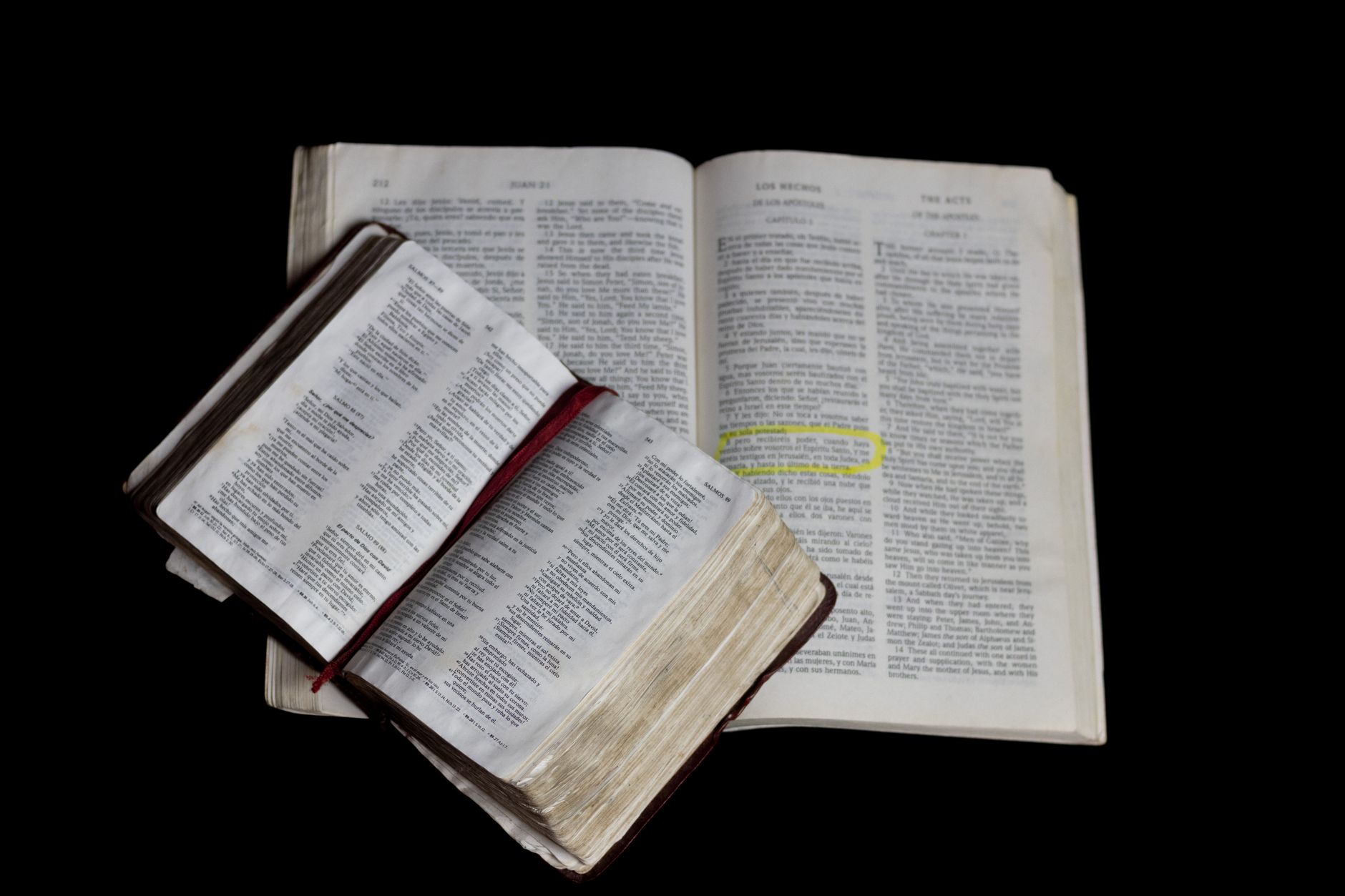
Christians have used every available technology to access and spread God's Word. The Gutenberg press made the Bible available to the general population for the first time. Radio brought preaching into homes. Television brought it to millions. The internet created access to sermons, commentaries, and devotionals that wouldn't have been possible otherwise. The Bible app on your phone is a technology tool that serves a spiritual purpose.
AI is a new tool. The question isn't whether it's technology — everything is technology. The question is what it's used for, and whether it's being used to draw people closer to God and Scripture or further from it.
FaithSpark is built with one purpose: to help people engage with God's Word and prayer every day. The AI serves that purpose. It doesn't replace Scripture — it points you back to it. It doesn't replace your pastor — it prepares you to receive what your pastor says. It doesn't replace the Holy Spirit — it creates a space where the Spirit can work.
What I've Seen God Do Through FaithSpark
I'll tell you what convinced me that what I built is worth something.
I got a message from a woman who said she was sitting in her car in a parking lot, crying, not sure she wanted to keep going. She opened FaithSpark because she didn't know what else to do. She said the devotional that came up that morning was the most specific, most exactly-what-she-needed thing she'd ever read — more targeted to her actual situation than any human could have produced without knowing her.
I don't think the AI did that. I think God used the tool to say something He wanted to say to her.
That doesn't happen every time. Some mornings the devotional is good and lands quietly. Some mornings it's just words and people move on. But the fact that it can happen — that God can use this tool to reach someone in their hardest moment — is enough for me.
Guardrails I Built In
I'm not naive about the risks of AI in spiritual content. I built some specific guardrails into FaithSpark because of them:
Every devotional is grounded in a real Bible passage. The AI doesn't write floating spiritual content — it starts from Scripture and applies outward from there.
The app encourages you to read the passage yourself. FaithSpark isn't trying to replace your Bible reading. It's a companion to it.
The AI doesn't claim to be the Holy Spirit. It's a tool. It's named Spark, not God, not Jesus, not the Spirit. Its job is to facilitate — to create a space for the real thing.
I use it myself. I built this because I needed it. I use it every morning. If it led me away from Scripture or produced bad theology, I would have noticed. So far — and I've been checking — it hasn't.
The Bottom Line
An AI devotional can be biblical if it's built on Scripture, grounded in sound theology, and used to supplement rather than replace genuine Bible engagement. FaithSpark is designed to be exactly that.
Whether God can work through it — I'm confident He can. He's worked through burning bushes, donkeys, dreams, and fishermen. A well-built faith app is well within His creative range.
For more on this topic and on building a daily Scripture habit, read the daily devotional app overview, or explore the Jeremiah 29:11 devotional and the Isaiah 40:31 devotional on the FaithSpark blog.
Two questions for your own reflection:
- What would you need to believe to be true about God in order to trust that He can speak through an unexpected source?
- Is your current devotional practice drawing you closer to Scripture — or has it become a substitute for it?
Download FaithSpark free on the App Store or Google Play and read your first AI devotional tomorrow morning.