I want to tell you something about Jeremiah 29:11 that most devotionals skip over.
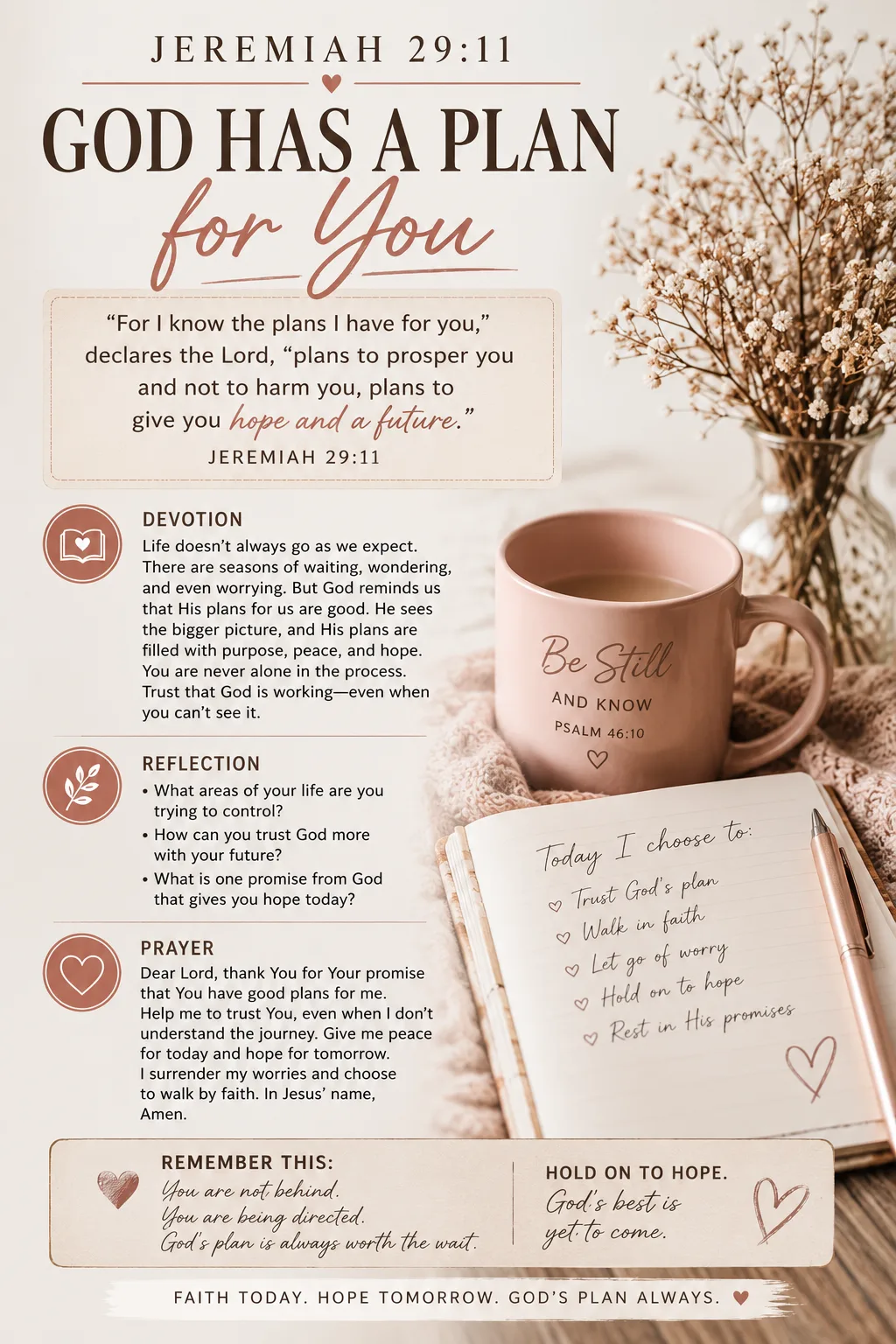
You know the verse. Everybody knows the verse. It's on coffee mugs and graduation cards and bumper stickers. "For I know the plans I have for you, declares the Lord, plans to prosper you and not to harm you, plans to give you hope and a future."
It is one of the most quoted Bible verses in the world. And for a lot of people it has become background noise — something they recognize but don't really hear anymore. Something that sounds nice but doesn't feel true in the season they're actually in.
I want to slow it down. Because the context of this verse changes everything about what it means. And the context is not comfortable.
What Is Jeremiah 29:11 About — Really?
Here is what most people don't know about Jeremiah 29:11. God was not speaking to people whose lives were going well. He was speaking to people who had been taken captive to Babylon. Their city had been destroyed. Their temple had been burned. They had been forcibly removed from everything they knew and everything they loved and dragged to a foreign country where they would live as exiles for seventy years.
Seventy years. Not a rough season. Not a hard month. Seventy years of living far from home in a place they never chose.
And God's message to them was not hang in there it'll get better soon. His message was — I know you're in Babylon and I want you to build houses and plant gardens and have children and pray for the city you're living in because you're going to be here for a long time. But I also want you to know — I have not forgotten you. I have plans for you. Plans for a future and a hope.
That is the context of Jeremiah 29:11. Not a prosperity promise. A word from God to people in exile who needed to know they had not been abandoned.
And that is why it is one of the most searched Bible verses on the internet. Because the people searching for it are in their own versions of Babylon. They are in the hard season. They are in the waiting. They are trying to figure out how to hold on when the future they planned has come apart.
This verse is for them. For you. Right now.

The Full Context — Jeremiah 29:10-13
Let me give you the verses that surround the famous one because they matter enormously.
Verse 10 — "When seventy years are completed for Babylon, I will come to you and fulfill my good promise." Seventy years first. Then the fulfillment. God is not saying your exile ends tomorrow. He is saying your exile has a limit and I will keep my promise on the other side of it.
Verse 11 — "For I know the plans I have for you." I know. Present tense. God already knows the plans. They are already written. They are already in motion. You just can't see them from where you are standing.
Verses 12-13 — "Then you will call on me and come and pray to me, and I will listen to you. You will seek me and find me when you seek me with all your heart." God is saying the purpose of the exile — at least in part — is to create the conditions where His people would actually seek Him with everything. Not casually. Not as a backup plan. With all their heart. The hard season drives you toward God in ways that comfort never would.
Three Things This Verse Is Actually Saying to You
First — God is not surprised by where you are. The exiles in Babylon didn't choose to be there. Life happened to them. Plans fell apart. Circumstances moved them somewhere they never intended to go. And God said — I know the plans I have for you right here. Not plans for the life you wanted. Plans for the life you have. He is not working around your circumstances. He is working through them.
Second — The plans are already written. The Hebrew word for plans here is machashaboth — it means thoughts, intentions, designs worked out in detail. God is not improvising your future. He has designed it. He knows where this road leads even when you can't see ten feet in front of you.
Third — Hope and a future are not the same as comfort and ease. The exiles went home eventually. But they went home changed. Formed. Deepened by what they had been through. The future God promises is often built on the ground of the hard season, not delivered in spite of it.
A Practical Word About the Waiting
One of the things God told the exiles in the verses just before Jeremiah 29:11 was to settle in. Plant gardens. Build houses. Have families. Pray for the city. In other words — don't just survive the hard season. Live in it.
That is hard advice. When you're in the hard season your whole instinct is to get through it as fast as possible. To white-knuckle it until things get better. To put your real life on hold until the exile is over.
God says plant a garden. Live here. Seek Me here. Let Me do what I'm doing in you while I'm also doing what I'm doing in your circumstances.

I built FaithSpark in the middle of my own waiting season. Not when everything was figured out. Not when the path was clear. In the middle of the exile. And what I found was that meeting God every morning in Scripture — actually seeking Him with my whole heart the way Jeremiah 29:13 describes — was the thing that made the waiting livable.
That is what this verse promises. Not escape from the hard season. Transformation through it. And a future on the other side that only God could have designed.
If you're in the exile and want to build the practice of seeking God with your whole heart the way Jeremiah 29:13 describes, Mind Garden Press has a guide on 365-day devotionals for beginners — committing to a full year of daily seeking is one of the most powerful things you can do in a waiting season. Their piece on staying consistent with daily devotionals is also worth reading for the days when the practice feels dry and you need a reason to keep going.
For more on trusting God through what you didn't choose, the Genesis 37 devotional walks through Joseph's pit story — another man in his own version of Babylon who couldn't see how God was working until years later. And the Romans 8:28 devotional speaks directly to the promise that God works all things together for good — even the pieces you would never have chosen.
A Simple Prayer Based on Jeremiah 29:11
Lord, I am in a season I did not choose and I cannot fully see the end of. I am choosing today to believe that You know the plans — not just in general but specifically for my life, right here, right now. I choose to believe Your plans are good even when the evidence around me is confusing. Help me to seek You with my whole heart in this season. Help me to plant gardens in Babylon — to be present and faithful in the place I'm in right now rather than just enduring it. I trust You with the future I cannot see. Amen.
FaithSpark was built for the morning before you know how the day is going to go. A daily personalized devotional grounded in Scripture that meets you in your specific season and reminds you that God knows the plans and they are good. Visit faithspark.app or download now on iOS or Android. Browse more devotionals on the FaithSpark blog.