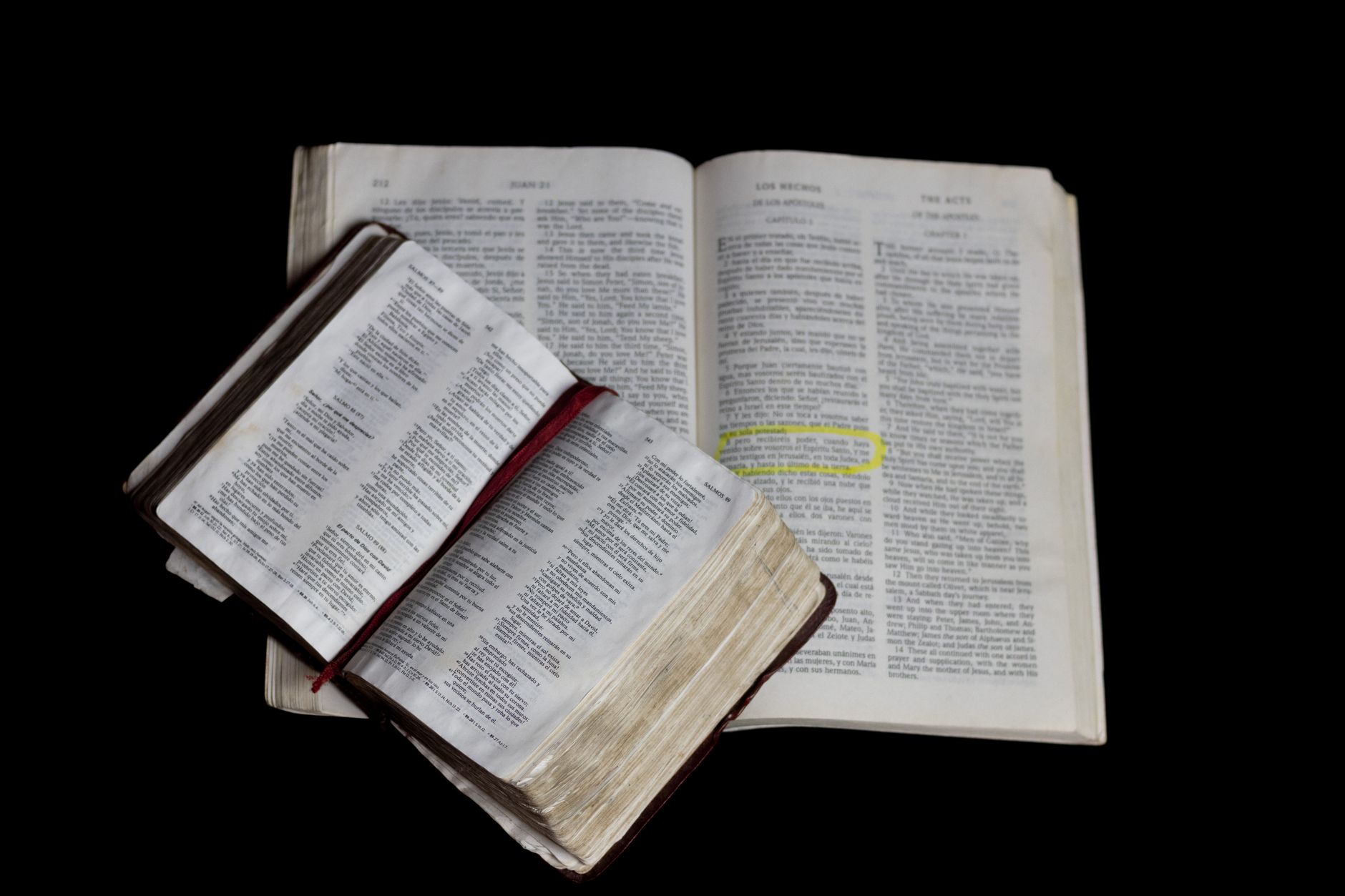
A few months back one of my kids asked me at dinner, completely out of nowhere, "Dad, do you think there's aliens?" And then, before I could even answer, the follow-up: "Does the Bible say anything about it?"
I didn't have a clean answer. I've thought about it plenty on long hauls — there's nothing like driving through West Texas at 2am with no other headlights for fifty miles and a sky absolutely loaded with stars to get you wondering what else might be out there. But I realized I'd never actually sat down and looked at what Scripture says, instead of just what I'd heard other people say it says.
So I did. And what I found surprised me a little — not because the Bible has some hidden answer everybody's missing, but because of how honestly it doesn't try to answer a question it was never written to answer, while still saying some genuinely fascinating things along the way.
What Does the Bible Actually Say About Aliens?
Here's the direct answer first: the Bible never mentions aliens or life on other planets. Not once, not in code, not hidden in a translation somewhere. If you're looking for a verse that settles the question, it doesn't exist.
But that's not the same as saying Scripture has nothing to offer here. The Bible says a lot about the heavens, about beings that aren't human, and about a universe far bigger and stranger than the writers of Genesis could have fully grasped — and a lot of that ends up brushing right up against the question without ever answering it directly.
The Verse Everybody Brings Up — Ezekiel's Vision
If you've spent any time around this topic online, you've probably run into Ezekiel 1. It's the passage ancient-astronaut theorists point to more than any other in the Bible.
"I looked, and I saw a windstorm coming out of the north — an immense cloud with flashing lightning and surrounded by brilliant light... In the fire was what looked like four living creatures... Each of the wheels had a rim, and there were rims joined to rims, and they sparkled like topaz."
Read it cold, and I get why people see a spacecraft. Wheels within wheels. Fire. Eyes all around the rims. Beings that don't look human. It reads strange and mechanical in a way most of Scripture doesn't.
But here's what I think gets missed. Ezekiel tells you directly what he's describing — "this was the appearance of the likeness of the glory of the Lord" (Ezekiel 1:28). He's not reporting a craft. He's straining to describe something that language wasn't built for: the presence of God Himself, appearing to a prophet in exile, using the most overwhelming imagery he had access to. The whole book of Ezekiel is full of visions like this — symbolic, layered, meant to communicate the unspeakable holiness of God rather than catalog physical objects.
What the Bible Does Say About the Heavens
Where Scripture gets specific isn't about extraterrestrial life — it's about the sheer scale of what God made, and what that scale is supposed to do to you.
Psalm 19:1 — "The heavens declare the glory of God; the skies proclaim the work of his hands." Not a scientific claim. A worship claim. The size and mystery of the sky is presented as evidence, not as a threat.
Psalm 8:3-4 — "When I consider your heavens, the work of your fingers, the moon and the stars, which you have set in place, what is mankind that you are mindful of them?" David is doing exactly what my kid was doing at the dinner table — looking up, feeling small, and asking what that means about his place in things. And the answer the psalm lands on isn't insignificance. It's the opposite. God set the stars in place and is still mindful of you specifically.
Job 38 — God responds to Job's suffering not with an explanation, but with a tour of everything Job doesn't understand about creation — the foundations of the earth, the storehouses of snow, the path of light. The point isn't to make Job feel small for the sake of it. It's to reorient him toward a God whose understanding is so far beyond ours that our biggest unanswered questions are still inside His hands.
Colossians 1:16 — "For in him all things were created: things in heaven and on earth, visible and invisible... all things have been created through him and for him." This is about as close as Scripture gets to addressing the bigger question. Whatever exists — visible or invisible, here or out there — exists through Christ and for Him. That includes whatever we don't yet understand about the universe.
So Is There Life Out There?
Honestly — the Bible doesn't say. And I've come to think that's not a gap in Scripture, it's just not the question Scripture was written to answer. The Bible is the story of God and humanity, of a Creator who became flesh and walked among us, who died and rose again for people on this specific planet. It's not a science text, and it doesn't pretend to be.
What I've landed on is this: I can be genuinely curious about the size and mystery of the universe — and I am — without needing it to threaten or prove anything about my faith. The same God who set the Milky Way in place is the God who knows the number of hairs on my head. Those aren't in tension. They're both just true.
If wrestling with the vastness of God's creation and your place in it is something you think about, the Psalm 139 devotional goes deep on being fully known by a God big enough to have made all of this. And if you've ever felt small or unseen against the scale of everything, the Isaiah 40:31 devotional is a good place to land — God's strength offered to people who feel like a speck. The Genesis 22 devotional also speaks to trusting a God whose plans and scope are bigger than what we can fully see from where we're standing.
A couple of things worth sitting with:
- Does the size of the universe make God feel further away to you, or closer?
- If Scripture doesn't answer a question you're curious about, can you hold the curiosity loosely without it shaking what you do know to be true?

A Simple Prayer
Lord, You made all of it — the parts I understand and the parts I don't. I don't need every question answered to trust You. Thank You that the same God who set the stars in their place is mindful of me specifically. When I look up and feel small, remind me that small isn't the same as forgotten. Grow my wonder without shaking my faith. Amen.
If this kind of question got you curious, FaithSpark actually has a whole section in the Explore tab that dives into UFOs and how they might correspond with Scripture — for anyone who wants to go further than one article can take you. Browse more devotionals on the FaithSpark blog, visit faithspark.app, or download FaithSpark free on iOS — coming soon to Android — to explore it yourself.